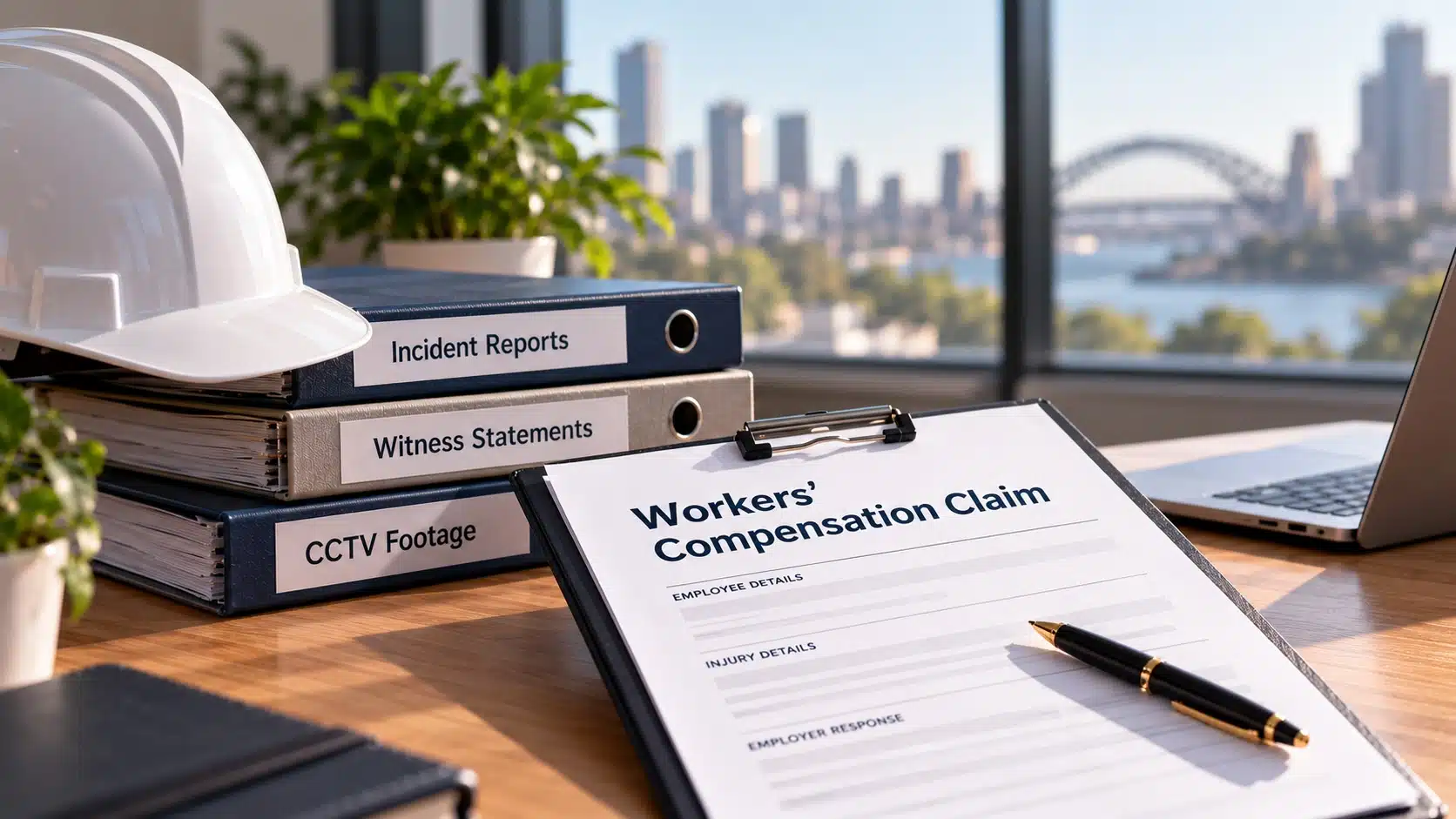
Few things disrupt an operational rhythm quite like receiving an unexpected workers’ compensation claim form. The situation is doubly frustrating when the claim arrives immediately after you initiate a performance review, issue a formal warning, or announce an operational restructure.
The immediate reaction of many business owners is: “We reject this claim.”
In Australia, employers do not personally accept or reject a statutory workers’ compensation claim. Whether you operate under icare in New South Wales, WorkSafe in Victoria, WorkCover Queensland, or equivalent state regulators, that legal determination rests with the relevant scheme insurer or claims decision-maker.
However, insurers make liability decisions based on the evidence presented to them. If an employer submits a claim form with vague objections or emotional complaints, the insurer may not have sufficient information to properly assess the employer’s concerns.
Workers’ compensation requirements differ across Australian jurisdictions, so employers should consult the relevant scheme’s guidance when responding to a claim. See Safe Work Australia’s overview of workers’ compensation.
To challenge a claim you believe is unmeritorious or not work-related, you need to understand the relevant statutory grounds, build an objective evidence dossier, and provide relevant information within applicable timeframes.
Employers dealing with complex workplace issues can seek support through LiquidHR’s HR consulting services to review their processes and manage employment-related risks.
1. Grounding Your Dispute in Statutory Reality
Insurers and state tribunals assess objections against the applicable legislation and evidence, not an employer’s frustration. If you are challenging a workers’ compensation claim, your position should be anchored in the relevant statutory requirements.
The “Reasonable Management Action” Defence (Psychological Claims)
Psychological injury claims can create significant challenges for Australian employers. In certain circumstances, state legislation provides an exclusion for psychological injuries arising wholly or predominantly from reasonable management action taken in a reasonable manner. Examples include Section 11A of the Workers Compensation Act 1987 in New South Wales and Section 40 of the Workplace Injury Rehabilitation and Compensation Act 2013 in Victoria.
For Victorian claims, consult the Workplace Injury Rehabilitation and Compensation Act 2013 for the applicable statutory framework.
Employers should check the applicable statutory requirements when assessing whether the reasonable management action exclusion may apply. Refer to the NSW Workers Compensation Act 1987.
Management actions that may be relevant include:
- Formal performance reviews and Performance Improvement Plans (PIPs).
- Lawful and reasonable directions regarding work duties or hours.
- Disciplinary investigations and formal warnings.
- Genuine business restructures and redundancy consultations.
- Decisions concerning promotions, transfers, or flexible working arrangements.
The precise legal test depends on the applicable legislation and circumstances. The reasonableness of the management action and the manner in which it was carried out may both be relevant. Poorly handled feedback, humiliating treatment, or inadequate procedural fairness may undermine an employer’s position.
Lack of Employment Causation
For an injury or illness to be compensable, it must satisfy the applicable statutory tests connecting the condition to employment. Depending on the jurisdiction and type of injury, employment may need to be a significant, substantial, or contributing factor.
Relevant issues that may warrant further investigation include:
- An injury allegedly occurring during a personal activity or deviation disconnected from work duties.
- A degenerative, age-related, or pre-existing condition where the extent of any workplace contribution is disputed.
- Evidence that does not support the alleged connection between the injury and the worker’s employment.
A pre-existing condition does not automatically prevent a claim from being compensable. The relevant legislation and medical evidence must be considered.
Contradictory Factual Evidence
Objective evidence may help clarify discrepancies in an injury report or the circumstances surrounding a claim. Relevant material may include:
- An incident that was not reported at the time and has no supporting witness evidence.
- Claim details that appear inconsistent with access logs, CCTV footage, timesheets, or vehicle GPS data.
- Information about outside work or recreational activities that may need to be considered alongside the worker’s certified medical restrictions.
Any apparent inconsistency should be investigated carefully. An absence of immediate reporting or evidence of outside activities does not, by itself, establish that a claim is invalid or fraudulent.
2. The 48-Hour Evidence Playbook
Workers’ compensation schemes operate under statutory timeframes for claim assessment and liability decisions. These requirements vary by state, claim type, and circumstances. Employers should notify the insurer promptly and confirm the applicable deadlines rather than assume a single timeframe applies nationally.
As an initial practical target, aim to preserve relevant evidence and organise your response within the first 48 hours after becoming aware of the claim.
Step 1: Secure Contemporaneous Data
Do not wait until evidence is requested by an investigator. Promptly identify, preserve, and securely store relevant records, including:
- Digital access-control logs and vehicle telematics for the relevant shift.
- Incident reports, supervisor daily logs, and initial first-aid treatment notes.
- Relevant CCTV footage before routine retention systems overwrite it.
- Emails, roster records, timesheets, and other documents that may help establish the timeline.
Ensure that records are collected and handled lawfully, with appropriate regard for privacy and confidentiality.
Step 2: Take Witness Statements
Identify supervisors, first-aid officers, and colleagues who may have relevant firsthand knowledge. Ask open, neutral questions and record their responses accurately.
Questions may include:
- Did the worker mention experiencing pain or discomfort before the shift began?
- Did the worker report an incident during the shift?
- What happened before the injury was reported?
- What exact words were exchanged when the injury was first reported?
Statements should reflect each witness’s own recollection. Avoid leading questions, assumptions, or pressure to support a particular version of events.
Step 3: Build the Management Action Chronology (For Psychological Injury Claims)
If a psychological injury claim follows a performance or disciplinary meeting, compile a clear, chronological record of the relevant management action. This may include:
- The written meeting invitation and evidence of the notice provided.
- Records showing whether the employee was offered the opportunity to bring a support person, where applicable.
- Objective documentation supporting the performance concern, such as KPI scorecards, error rates, or client complaints.
- Contemporaneous file notes recording how feedback was delivered and the circumstances of the meeting.
- Relevant correspondence, meeting notes, and follow-up actions.
Keep the chronology factual and balanced. Include relevant information that may support or contradict the employer’s initial understanding of events.
3. Submitting the Formal Employer Objection
When completing the employer section of an injury claim, simply marking the claim as disputed may not communicate the full basis of your concerns. Ask the insurer or claims manager how to provide supporting information and whether a formal written submission is appropriate under the relevant scheme.
A clear submission should:
- Identify the relevant statutory provisions, where applicable.
- Provide an indexed list of supporting evidence, such as emails, CCTV records, incident reports, and witness statements.
- Identify specific discrepancies in the reported circumstances and explain the evidence supporting those concerns.
- Request further factual investigation where material questions remain unresolved.
- Identify relevant medical or causation questions that may require assessment by an appropriately qualified medical practitioner.
Requests for an independent factual investigation or an Independent Medical Examination (IME) should be made through the appropriate claims process. The insurer or relevant decision-maker determines what further investigation or medical assessment is warranted under the applicable scheme.
4. Managing Risks While a Claim Is Under Investigation
Challenging a workers’ compensation claim can create operational tension. Employers must continue to meet their employment law obligations while the insurer assesses liability.
The General Protections Risk (Section 340 of the Fair Work Act)
Under the Fair Work Act 2009, employees may be protected from adverse action because they exercise a workplace right. Depending on the circumstances, this can include making a complaint or inquiry in relation to their employment or exercising rights connected with a workers’ compensation claim.
For further information, consult the Fair Work Ombudsman’s guidance on protections at work and general protections.
Disciplining, demoting, reducing hours, or terminating an employee because they lodged a workers’ compensation claim may expose an employer to legal risk.
If a performance or disciplinary process was already underway, manage it carefully and maintain clear, contemporaneous documentation of the legitimate reasons for any action. Do not assume that an existing process removes the need to assess general protections risks. Obtain appropriate legal advice where necessary.
The Return-to-Work Obligation
Disputing a claim does not automatically remove an employer’s workplace health and safety or return-to-work obligations. The precise requirements depend on the relevant state or territory scheme, the worker’s circumstances, and the applicable legislation.
Where required, employers should participate in return-to-work planning and consider suitable duties consistent with the worker’s certified capacity and restrictions.
Refusing to engage in required return-to-work processes may create additional compliance risks. Where appropriate, identify genuine, productive duties that can be performed safely while the claim is being assessed.
5. What Happens When the Insurer Decides?
The Insurer Denies the Claim
If the insurer determines that the claim does not meet the applicable statutory requirements, it may issue a formal liability decision or notice of denial. The terminology and procedures vary between jurisdictions. For example, a Section 78 notice may be relevant in New South Wales in certain circumstances.
The worker may have review or dispute-resolution rights under the applicable scheme. If the decision is challenged, the evidence gathered by the employer may form part of the material considered during the review or proceedings.
Employers should not automatically assume that an absence following a denied claim must be covered by accrued personal leave, annual leave, or unpaid leave. The appropriate treatment depends on the circumstances, the worker’s entitlements, and applicable employment laws.
Because claim assessment and dispute procedures vary by jurisdiction, employers should refer to the appropriate workers’ compensation authority for scheme-specific guidance.
The Insurer Accepts the Claim
If the insurer accepts liability despite the employer’s objections, the employer should review the reasons for the decision and ask what review or dispute mechanisms are available under the relevant scheme.
Depending on the jurisdiction and circumstances, there may be options to provide further evidence, request a review, or raise concerns through the relevant regulator or dispute-resolution body.
Protecting Your Business
A disputed workers’ compensation claim should be approached through evidence, not assumptions. Clear timelines, accurate position descriptions, fair management processes, and contemporaneous file notes can help employers respond appropriately when questions arise about a workplace injury.
For a general overview of workers’ compensation arrangements and relevant state and territory contacts, see the Fair Work Ombudsman’s workers’ compensation guidance.
If your leadership team regularly manages difficult performance issues or navigates complex workplace injuries, reviewing your internal processes and documentation can help identify gaps and reduce avoidable compliance risks.
For ongoing support with workplace relations, policies, and compliance processes, explore LiquidHR’s HR outsourcing services.
If you have concerns about an active claim or need support compiling a clear record of relevant management action, consider a structured workplace relations review to assess your position and identify the appropriate next steps before applicable deadlines expire.
Need help navigating HR in your business?
Get practical advice tailored to your team and stage of growth.