How HR changes when your business moves from small to medium size

Introduction
Crossing the line from small to medium isn’t just about headcount—it flips key HR obligations. In Australian employment law, a small business is one with fewer than 15 employees. Once you hit 15 or more, several rules change overnight, especially around dismissal, redundancy, casuals, and the new right to disconnect. Fair Work Ombudsman
At a glance: what changes at 15+ employees?
- Redundancy pay: The small-business exemption disappears. Medium employers generally must pay redundancy (depending on service).
- Unfair dismissal thresholds: The minimum employment period for new starters drops from 12 months (small) to 6 months (non-small). The Small Business Fair Dismissal Code no longer applies.
- Right to disconnect: Applies to non-small employers from 26 Aug 2024. Small businesses got extra time; their start date is 26 Aug 2025. If you’re now 15+, you should already be compliant.
- Casuals: The new employee-choice pathway to go permanent kicked in 26 Aug 2024 (non-small). Small businesses join on 26 Aug 2025. Crossing 15+ means you’re in the earlier cohort.
- Information statements cadence: Casual employees in non-small businesses must be re-issued the Casual Employment Information Statement (CEIS) at 6 months, 12 months, and annually thereafter; small businesses re-issue at 12 months.
- Looking ahead: At 100+ employees, you become a WGEA “relevant employer” and must report gender equality data (and your gender pay gap is published). Start preparing well before you hit 100.
1) Redundancy & termination: from exemptions to obligations
Under the NES, small businesses (fewer than 15 employees) generally don’t have to pay redundancy. Once you’re 15+, that exemption disappears—so plan restructures with consultation and redundancy pay in mind. Keep accurate service records and check the relevant modern award for consultation clauses.
2) Unfair dismissal risk goes up (and earlier)
When you’re medium-sized, the minimum employment period for unfair dismissal becomes 6 months (vs 12 months for small). Also, the Small Business Fair Dismissal Code no longer shields your process. That means more terminations are reviewable sooner—so tighten performance management and procedural fairness.
3) Right to disconnect: already in force for 15+
Australia’s right to disconnect lets employees refuse unreasonable out-of-hours contact. It applies to non-small employers from 26 Aug 2024; small businesses start 26 Aug 2025. If you’ve crossed to 15+, you should have a policy, manager scripts (urgent vs non-urgent contact), and rostering/comms practices aligned—and a dispute pathway, as the FWC can issue stop orders.
4) Casuals: new definition, earlier “employee-choice” pathway & CEIS timing
From 26 Aug 2024, the NES moved from “casual conversion” to an employee-choice pathway to permanent employment. Non-small employers were covered from Feb 26, 2025 (for eligible existing casuals); small businesses join Aug 26, 2025. Becoming 15+ means your casuals may already be able to notify for permanency under the earlier timeline. Pair that with the stricter CEIS re-issue cadence for non-small employers (6 months, 12 months, then annually).
5) Plan now for 100+ (WGEA reporting)
At 100+ employees, you must report annually to WGEA (private sector window 1 Apr–31 May). WGEA now publishes employer gender pay gaps, so data accuracy and your narrative matter. Start by mapping your HRIS fields to WGEA requirements and modelling any structural gaps.
Store closes, job ends… but no redeployment offered: is that unfair dismissal?

When a site shuts, it’s tempting to think employment naturally winds down. A recent Fair Work Commission (FWC) decision says “not so fast.” Where a business had another operating location and didn’t offer a workable move, the Commission treated the end of employment as a dismissal on the employer’s initiative, even though the trigger was a landlord-driven closure and the worker was casual.
The short version
- What changed: A metropolitan salon closed due to centre redevelopment. The worker received an email with a firm end date (late May 2025).
- Critical miss: The employer had a second site the worker had previously covered shifts at, but no redeployment was explored or offered.
- FWC’s view: This was a dismissal (s.386 FW Act), not just a casual engagement “running out.” The failure to consider redeployment weighed heavily against the employer.
Why the FWC called it a “dismissal” (not an inevitable end)
Under s.386 of the Fair Work Act, a person is dismissed if employment ends on the employer’s initiative. A written notice that sets a final working day typically points to dismissal (even for casuals) because the employer has taken the step that ends the relationship. The FWC emphasised that external pressures (like a landlord’s redevelopment) don’t, by themselves, change that analysis. AustLIIfwc.gov.au
Redeployment: the make-or-break issue
A termination isn’t a genuine redundancy if, in all the circumstances, it would have been reasonable to redeploy the employee within the enterprise or an associated entity (s.389). In this case, the worker had historically covered shifts at the other location, but no offer was made. That omission undermined any “nothing we could do” argument. AustLIIfwc.gov.au
“But they were casual” isn’t a shield
The Commission rejected the idea that casual status meant the job simply tapered off. Once the employer set an end date and communicated it, the decision came from the employer not from the casual nature of engagements. Casuals can still challenge a dismissal, subject to the usual eligibility rules.
Employer checklist when closing a site (or consolidating)
- Consult early and in writing
Follow any award/EA consultation clauses. Keep dated notes. - Document the operational reason
Record why the site is closing and the business case for change (helps with s.389(1)(a)). fwc.gov.au - Search redeployment broadly (and creatively)
List roles across all entities/locations. Consider re-allocating duties, insourcing, or short training to make a role viable. Record options considered, who you spoke to, and outcomes. hcourt.gov.au - Assess suitability, don’t assume
For each potential role: location, roster, classification, pay, start date, training needed. Reasonableness is assessed in all the circumstances. AustLII - Make real offers (with detail)
If a role exists, offer it in writing with duties, rate, hours, location, start date, and a reasonable response window. - If no redeployment, explain why
Prepare a short Redeployment Decision Log that sets out the roles canvassed and why each wasn’t reasonable or available. - Get the dates right
The dismissal takes effect on the date you set. That date kicks off the 21-day deadline for unfair-dismissal applications. fwc.gov.au
The Right to Disconnect is Here for Small Businesses (from 26 August 2025)

If you run a small business, you’ve probably sent a quick after-hours message thinking, they’ll see it in the morning. Now there’s a name (and a law) for that boundary: the right to disconnect.
As of 26 August 2025, the right to disconnect applies to employees of small business employers across Australia. It’s been in place for non-small business employers since 26 August 2024. Below, I’ll break down what’s changed, what counts as reasonable contact after hours, and a practical plan you can roll out in a month.
What actually changed?
- The right: Employees can decline to monitor, read or respond to work contact (or attempted contact) outside their working hours, unless refusing would be unreasonable.
- Who it now covers: From 26 Aug 2025, the obligation extends to small business employers. Larger employers have been covered since 26 Aug 2024.
- Yes, clients count: The right also covers contact from third parties connected to work (think customers, parents/students, patients, suppliers).
“Unreasonable to refuse” – what does that look like?
Whether refusing contact is unreasonable depends on context. Expect these factors to matter:
- Why you’re calling (urgent safety, legal compliance, system outage vs. a routine admin query)
- How disruptive the contact is (a midnight phone call vs. a scheduled email)
- Compensation for availability or extra hours (on-call allowance, overtime, TOIL)
- The person’s role/seniority and responsibilities
- The employee’s personal circumstances (e.g., caring duties)
Real-world examples
Likely reasonable to refuse
- A 10:30pm email chasing a non-urgent purchase order
- A weekend message asking for Monday’s meeting agenda
Likely unreasonable to refuse
- A rostered on-call worker (with allowance) ignoring a critical system outage
- A compliance call about time-sensitive safety, legal or regulatory issues
Are you a “small business employer”?
Under the Fair Work Act, a small business employer has fewer than 15 employees at a point in time. This headcount includes regular and systematic casuals and employees of associated entities. If you hit 15 or more, you aren’t a small business employer.
Awards, enterprise agreements and contracts
- The Fair Work Commission has inserted a right-to-disconnect term into all modern awards. Check how yours interacts with overtime, TOIL and rostering.
- Enterprise agreements may include their own right-to-disconnect provisions. If they’re more beneficial than the Act, they take precedence.
- Contracts and policies should line up with the Act and your award/EA.
Handling issues (without the drama)
Try to resolve problems in the workplace first. Document the conversation and any changes you make. If you’re stuck, either party can go to the Fair Work Commission (FWC) for help. The FWC can issue orders (for example, to stop unreasonable after-hours contact—or to stop an employee unreasonably refusing contact). Breaching an order can attract civil penalties. Keep your records tidy and follow any orders to the letter.
Quick FAQs
Does this stop managers from calling after hours?
No. It gives employees the right to not engage outside their hours unless refusing is unreasonable.
Do texts/WhatsApp count?
Yes, any form of contact or attempted contact.
If I’m on-call, do I still have the right?
Yes, but a refusal may be unreasonable if you’re rostered and compensated to be available.
What about time zones and flexible hours?
Set core hours per role, use send-later, and agree on response expectations.
Is Your HR Function Driving Growth or Holding You Back?
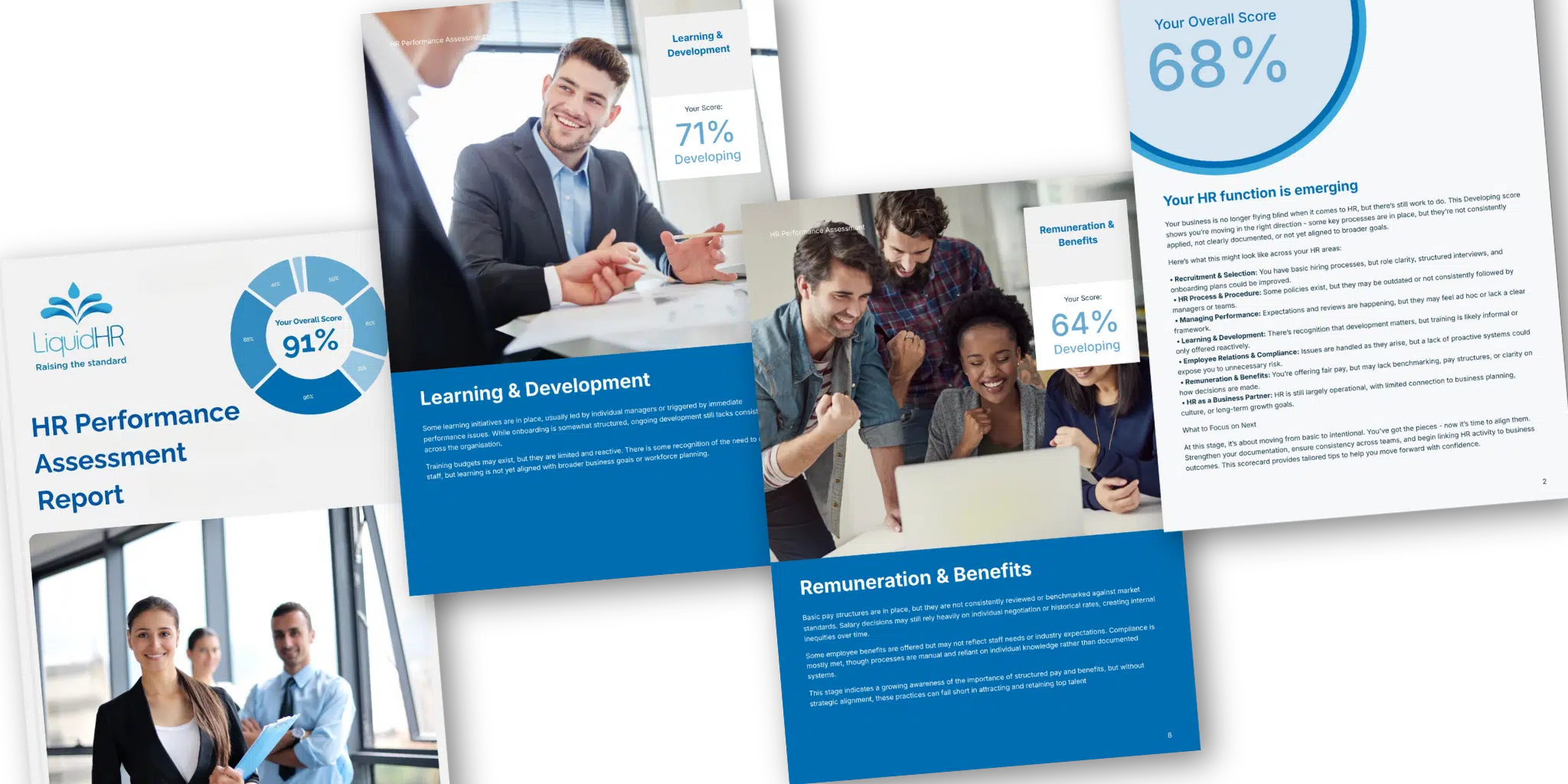
We’ve just launched our new HR Performance Assessment, a quick and insightful quiz designed to help business leaders uncover the strengths and gaps in their HR function.
In less than 10 minutes, you’ll receive a personalised report with your overall HR competency score and detailed insights across seven key areas – from recruitment and compliance to performance and culture. You’ll also get practical recommendations to help you take the next step, whether you’re building foundations or aiming for strategic impact.
Why take it? Because strong HR practices don’t just reduce risk – they improve retention, boost performance, and set your business up for sustainable growth.
👉 Take the HR Performance Assessment today and see where your HR stands.