Small business margins are tight, but the most expensive profit drains rarely show up as explicit line items on a P&L statement. Unchecked HR friction quietly erodes cash flow, team morale, and regulatory compliance long before it triggers a crisis.
1. Modern Award Misclassification
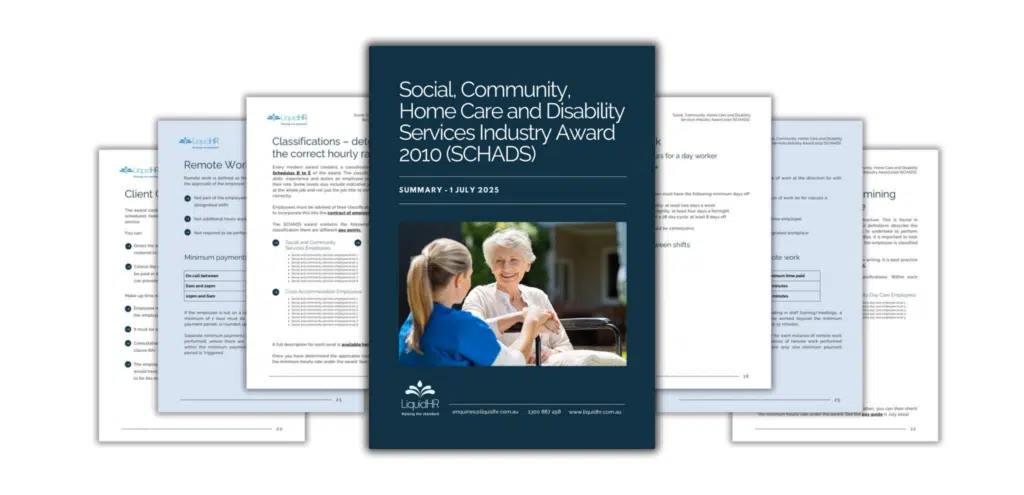
Navigating Australia’s Modern Awards is notoriously complex. Paying a flat salary without verifying penalty rates, overtime, or classification levels leaves businesses vulnerable to severe back-pay audits, interest fees, and Fair Work Ombudsman penalties.
Navigating Australia’s Modern Awards is notoriously complex. Awards can set requirements around minimum pay, hours of work, overtime, penalty rates and allowances, with employees covered by an award also receiving the relevant National Employment Standards (NES) entitlements. Fair Work Ombudsman – About awards
Paying a flat salary without properly checking the applicable award, classification and entitlements can leave businesses exposed to underpayment claims and back-pay liabilities.
Businesses can use Fair Work’s guidance on award classifications and pay guides to help identify the correct classification and minimum rates.
2. Off-the-Shelf Employment Contracts
Using generic employment contract templates downloaded online can create unnecessary legal exposure. A contract that doesn’t reflect the specific role, business or applicable workplace requirements may provide little protection when a dispute or sudden departure occurs.
Issues can arise around intellectual property, remote work arrangements, notice periods, confidentiality and restraint-of-trade provisions.
While templates can be a useful starting point, employment contracts should be appropriate for the individual business and role. The Fair Work Ombudsman’s employment resources and templates provide useful guidance for employers managing workplace obligations.
3. Botched Onboarding & Early Churn
Handing a new hire a laptop and a “good luck” attitude dramatically increases 90-day turnover. Replacing an employee costs roughly 1.5 times their annual salary once recruitment costs, lost productivity, and team retraining are factored in.
4. Delaying Tough Performance Conversations
Ignoring underperformance in the interest of avoiding conflict can ultimately punish your top talent.
When high performers consistently carry the workload of a disengaged or underperforming teammate without intervention, frustration builds, morale suffers and your best people may eventually decide to leave.
Performance conversations don’t have to begin with disciplinary action. Clear expectations, regular feedback and early intervention can help address issues before they become bigger problems.
The Fair Work Ombudsman’s guidance on managing performance and warnings includes practical resources for managing underperformance, performance improvement plans and difficult conversations.
5. Ignoring Psychological Safety & Absenteeism
Psychological health is increasingly an important part of workplace risk management. Under the model WHS framework, businesses must identify and manage psychosocial risks, including hazards such as excessive job demands, poor support, bullying, harassment and poor workplace relationships. Safe Work Australia – Psychosocial hazards
Safe Work Australia states that PCBUs, including employers, must eliminate psychosocial risks where reasonably practicable, or otherwise minimise them. Safe Work Australia – PCBU duties
Unmanaged workplace stress and psychosocial hazards can contribute to psychological harm, disengagement and other workforce problems.
Addressing these risks proactively is therefore both a people priority and an important part of responsible workplace risk management.
Need help navigating HR in your business?
Get practical advice tailored to your team and stage of growth.